
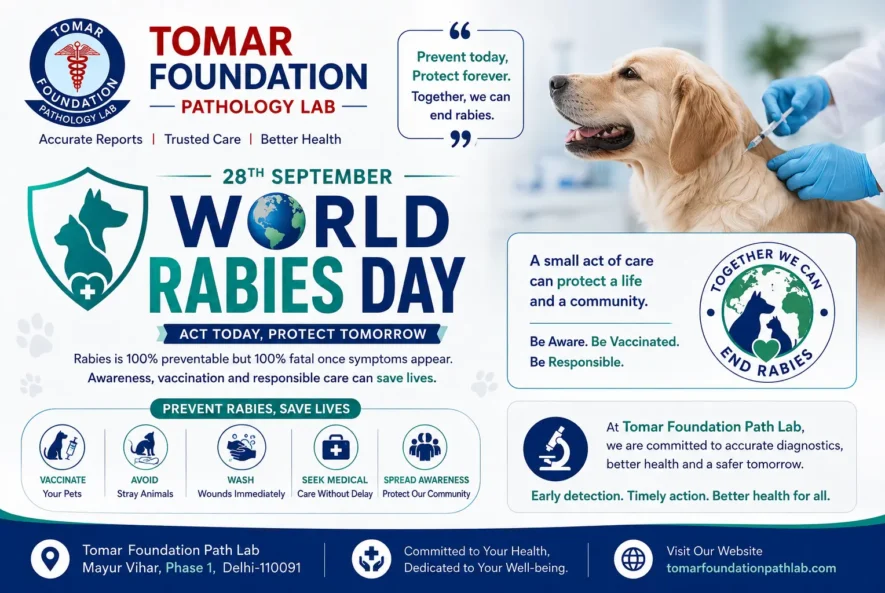
World Rabies Day 2026: Strengthening Prevention Through Awareness, Vaccination and Collective Action
World Rabies Day, observed annually on 28 September, is a global public-health initiative focused on raising awareness, strengthening prevention and supporting the elimination of rabies. The 2026 theme, “Stronger Together,” emphasizes coordinated action among communities, healthcare professionals, veterinary services, governments and public-health organizations to prevent rabies and work towards a rabies-free future.
A Preventable Public-Health Challenge
Rabies is a serious viral zoonotic disease that affects humans and animals. It remains an important public-health concern, particularly in regions where access to vaccination, healthcare and preventive services can be limited.
Despite its severity, rabies is preventable. Effective dog vaccination, public awareness, responsible animal care and timely professional medical care following potential exposure are fundamental components of rabies prevention.
World Rabies Day provides an opportunity to strengthen awareness and encourage coordinated action at individual, community and healthcare-system levels.
1. 🩺 Awareness Is the Foundation of Prevention
Public awareness is one of the most important elements of rabies control. People should understand that contact with potentially infected animals requires appropriate attention and should not be ignored.
Educational initiatives can help communities recognize potential risks, encourage responsible interaction with animals and promote timely consultation with qualified healthcare professionals.
“Awareness today can help prevent a serious health risk tomorrow.”
2. 💉 Vaccination: A Key Pillar of Rabies Control
Vaccination plays a central role in preventing dog-mediated rabies. WHO identifies expanded access to dog vaccination as a major component of rabies elimination strategies.
Responsible pet ownership includes maintaining appropriate veterinary care and following professional recommendations regarding animal vaccination.
Community vaccination initiatives can further contribute to reducing transmission at its source.
“Vaccinate responsibly. Protect animals. Protect communities.”
3. 🐕 Responsible Animal Care Strengthens Prevention
Responsible animal ownership goes beyond providing food and shelter. Regular veterinary care, appropriate vaccination and safe interaction with animals are important aspects of community health.
Families should also encourage children to interact with animals responsibly and understand the importance of seeking adult assistance if an unfamiliar or potentially aggressive animal is involved.
“Responsible animal care is responsible community care.”
4. 👨👩👧 Protecting Children Through Education
Children are an important focus of rabies-awareness programmes. Age-appropriate education can help them understand safe behaviour around animals and the importance of immediately informing a trusted adult following a bite or scratch.
Parents, schools and community organizations can play a valuable role in developing awareness from an early age.
“Educate early. Encourage safe habits. Protect young lives.”
5. 🚨 Never Ignore a Potential Animal Exposure
A bite or scratch from an animal that may carry rabies should be taken seriously. Appropriate medical evaluation should be sought promptly rather than relying on assumptions or delaying professional care.
Qualified healthcare professionals can assess the circumstances and determine the appropriate medical management, including whether rabies post-exposure prophylaxis is required. WHO identifies timely treatment as a critical component of preventing human rabies deaths.
“When exposure occurs, timely professional care matters.”
6. 🏥 Timely Healthcare Can Prevent Rabies Deaths
Rabies is unusual among serious infectious diseases because human deaths can be prevented through appropriate measures following exposure. WHO emphasizes the importance of access to post-exposure prophylaxis as part of rabies-control programmes.
This makes public awareness particularly important: recognizing potential exposure and seeking qualified medical advice without unnecessary delay can be a critical part of prevention.
“Recognize the risk. Seek professional care. Prevent the preventable.”
7. 🌍 One Health: Connecting Human and Animal Health
Rabies demonstrates why human health and animal health cannot be considered separately. Effective prevention requires collaboration between healthcare professionals, veterinarians, communities, governments and public-health authorities.
The One Health approach recognizes the close relationship between human, animal and environmental health and promotes coordinated action across sectors.
“Healthy animals. Healthy people. Stronger communities.”
8. 🤝 Stronger Together: The 2026 Global Message
The 2026 World Rabies Day theme, “Stronger Together,” highlights the importance of partnerships in rabies elimination. WHO identifies several priorities, including expanding dog vaccination, strengthening surveillance and reporting, improving public education and supporting sustainable community-led solutions.
No single organization can eliminate rabies alone. Sustainable progress requires cooperation across healthcare, veterinary services, government institutions and local communities.
“United action creates stronger protection.”
9. 🇮🇳 Rabies Prevention in India
Rabies continues to be an important public-health issue in India. WHO reports that millions of animal bites occur annually in the country, with dogs responsible for the majority of reported bites. Strengthening vaccination, awareness, surveillance and access to appropriate medical care remains essential.
India’s progress toward rabies elimination depends on sustained collaboration between public-health authorities, veterinary services, healthcare providers and communities.
“Stronger awareness. Better prevention. A healthier India.”
10. 🔬 The Role of Healthcare and Diagnostic Services
Healthcare institutions and diagnostic laboratories form an important part of a strong healthcare ecosystem. Professional medical assessment, appropriate diagnostic support, health education and timely referral contribute to effective healthcare delivery.
At Tomar Foundation Path Lab, our commitment to health awareness reflects the broader importance of preventive healthcare and informed health decisions.
🏥 Tomar Foundation Path Lab: Committed to Health Awareness
On World Rabies Day, Tomar Foundation Path Lab encourages individuals and families to learn about rabies prevention, support responsible animal care, promote vaccination awareness and seek appropriate professional medical attention following potential exposure.
Rabies elimination requires a coordinated approach in which individuals, families, communities, healthcare professionals, veterinary services and public-health authorities work together.
“Stronger Together.”
By strengthening awareness, vaccination programmes, healthcare access and community participation, we can move closer to the goal of eliminating human deaths from dog-mediated rabies. WHO and its partners continue to support the global Zero by 30 goal.
🌟 Key Takeaways
Awareness: Understand rabies risks and promote reliable health information.
Vaccination: Support appropriate vaccination of dogs through veterinary services.
Responsible Care: Encourage safe and responsible interaction with animals.
Children’s Safety: Teach children age-appropriate animal-safety awareness.
Timely Care: Seek professional medical assessment after potential exposure.
One Health: Connect human, animal and public-health efforts.
Community Action: Work collectively to strengthen prevention.
Zero by 30: Support global efforts to end human deaths from dog-mediated rabies by 2030.
❤️ Conclusion
World Rabies Day is more than an annual awareness event—it is a reminder that rabies prevention requires sustained commitment, informed communities and coordinated healthcare action.
With effective animal vaccination, responsible pet ownership, public education, strong surveillance and timely access to appropriate healthcare, rabies can be prevented and human deaths can be eliminated.
This World Rabies Day, let us strengthen awareness, encourage responsible action and work stronger together toward a safer and rabies-free future.
Tomar Foundation Path Lab — Committed to Your Health, Dedicated to Your Well-being.
