
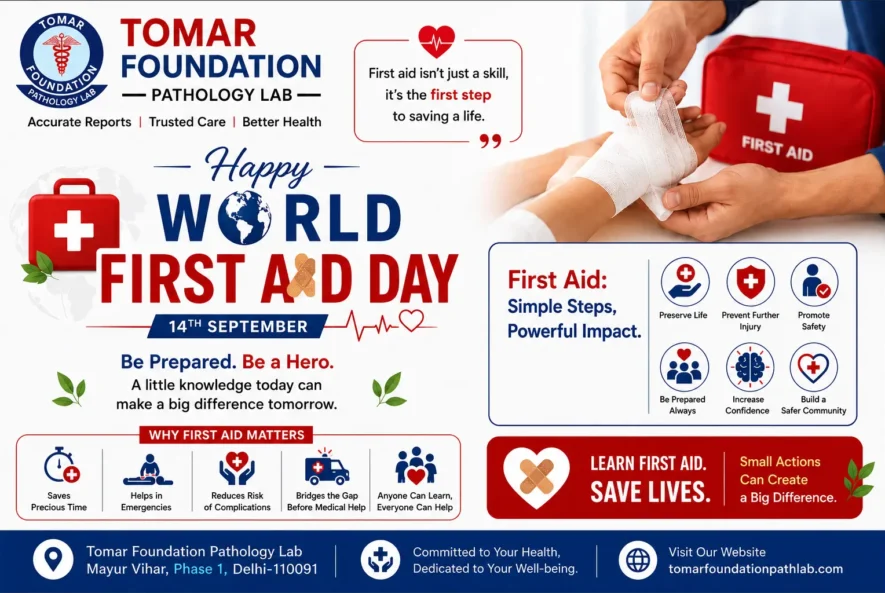
World First Aid Day: Building a Safer and More Prepared Community
World First Aid Day is a global health-awareness observance dedicated to highlighting the importance of first-aid knowledge, emergency preparedness, and timely assistance. Observed annually on the second Saturday of September, World First Aid Day 2026 falls on 12 September. This year, the International Federation of Red Cross and Red Crescent Societies (IFRC) is focusing on “First Aid in Migration Contexts,” emphasizing the importance of accessible first aid for people wherever they are.
🚑 First Aid: An Essential Part of Health Preparedness
Medical emergencies and unexpected injuries can occur at home, in schools, workplaces, public spaces, during travel, or within communities. In such situations, appropriate first aid can provide immediate support while professional medical assistance is being arranged.
First aid is not a substitute for professional healthcare. Rather, it forms an important part of the emergency-care pathway by promoting preparedness, appropriate response, and timely referral.
🩹 1. Understanding the Importance of First Aid
First-aid awareness helps individuals recognize when a situation may require urgent attention and understand the importance of obtaining professional medical assistance.
A well-informed community can respond more responsibly during emergencies and avoid unnecessary delays in seeking appropriate care.
⏱️ 2. Timely Response Can Make a Difference
During an emergency, timely recognition and appropriate action are important components of effective emergency care. First-aid education helps people develop the confidence to respond appropriately while waiting for trained healthcare professionals.
The objective is not to replace medical treatment, but to help ensure that a person is not left without appropriate assistance when urgent help is required.
🎓 3. First Aid Is a Skill That Can Be Learned
First aid should be learned through structured and reliable training. Professional training helps individuals understand appropriate responses, personal safety, emergency communication, and when to seek further medical care.
The IFRC’s current international first-aid guidelines are designed to support evidence-based first-aid, resuscitation, and education practices.
🏠 4. Promote First-Aid Awareness at Home
Families can improve emergency preparedness by keeping essential first-aid supplies appropriately maintained and ensuring that important emergency contacts are readily accessible.
Parents and caregivers can also encourage children and young people to learn age-appropriate safety and first-aid awareness under appropriate adult guidance.
🏫 5. First Aid Education in Schools and Workplaces
Schools and workplaces are valuable settings for promoting first-aid education. Regular awareness programmes can help create a culture of preparedness and responsible action.
Organizations can strengthen workplace safety by supporting appropriate first-aid training and ensuring that emergency procedures are clearly communicated.
🌍 6. First Aid Should Be Accessible to Everyone
The 2026 World First Aid Day theme places particular emphasis on people in migration contexts. People on the move may encounter barriers to healthcare, including geographical, linguistic, financial, cultural, or social challenges.
This year’s message reinforces a broader principle: first aid should be accessible to everyone, everywhere.
❤️ 7. Community Preparedness Strengthens Public Health
First aid is not only an individual skill—it is also an important component of community preparedness. The IFRC and its National Societies reach more than 50 million people annually through first-aid awareness activities.
Building first-aid awareness across communities can contribute to greater preparedness during emergencies and strengthen public health resilience.
🧑⚕️ 8. Know the Importance of Professional Medical Care
First aid should always be considered an initial response rather than a replacement for professional diagnosis or treatment.
When an emergency appears serious or potentially life-threatening, trained medical professionals and appropriate emergency services should be contacted without delay. Recognizing the limits of first-aid knowledge is itself an important part of responsible healthcare.
🧠 9. Stay Calm, Assess, and Respond Responsibly
An effective first-aid response begins with awareness and personal safety. People should avoid putting themselves or others in additional danger and should seek professional assistance whenever necessary.
Remaining calm and communicating clearly can help create a more organized response during an emergency.
🌟 10. Make First Aid a Part of Everyday Health Awareness
First aid should not be considered knowledge reserved exclusively for healthcare professionals. Appropriate education can help individuals become more aware of emergency situations and understand how to seek timely assistance.
Preparedness today can contribute to a safer and more resilient community tomorrow.
🏥 Tomar Foundation Path Lab: Promoting Health Awareness
At Tomar Foundation Path Lab, we believe that health awareness, preventive healthcare, and timely medical attention are important pillars of a healthier community.
On World First Aid Day, we encourage individuals, families, educational institutions, and workplaces to recognize the importance of first-aid education and emergency preparedness. Learning from qualified professionals and understanding when medical assistance is required can help promote a responsible approach to health and safety.
💡 Key Takeaways
Learn: Develop basic first-aid awareness through reliable training.
Prepare: Maintain appropriate emergency supplies and important contacts.
Stay Calm: Respond responsibly during unexpected situations.
Seek Help: Know when professional medical care is required.
Spread Awareness: Encourage first-aid education within your community.
Support Everyone: Promote accessible first aid for people in all circumstances.
❤️ Conclusion
World First Aid Day serves as an important reminder that preparedness, knowledge, and responsible action are essential components of community health. Whether at home, at school, at work, or while travelling, appropriate first-aid awareness can help people respond more confidently and seek professional care when it matters.
This World First Aid Day, let us promote a culture where health awareness meets preparedness, compassion leads to action, and no one is left without appropriate support during an emergency.
Tomar Foundation Path Lab — Committed to Your Health, Dedicated to Your Well-being.
