
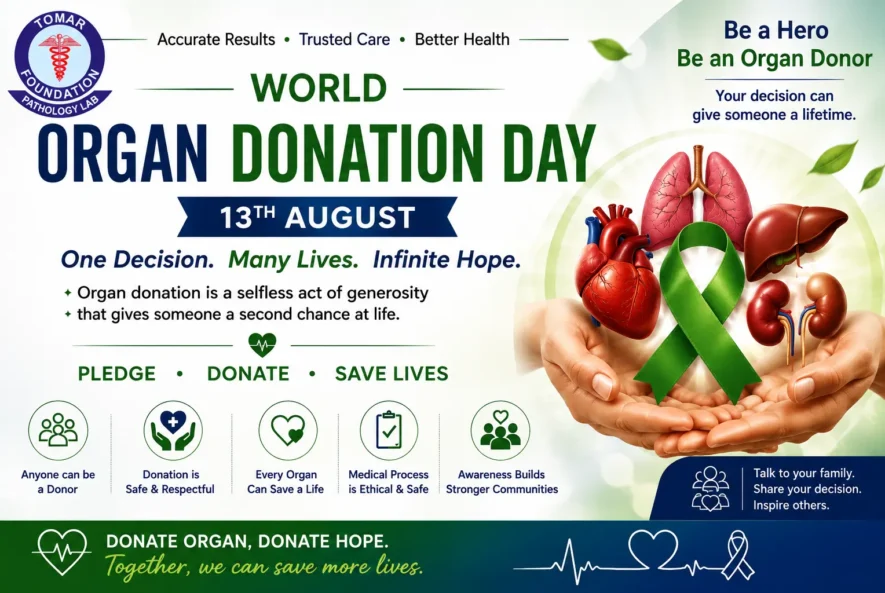
World Organ Donation Day: Advancing Awareness, Compassion & the Gift of Life
World Organ Donation Day is an important global health awareness initiative that highlights the transformative impact of organ donation and transplantation. It encourages informed conversations about donation, promotes greater public understanding, and emphasizes the importance of ethical and responsible healthcare practices. Tomar Foundation Path Lab supports this important cause by promoting health awareness, preventive care, and access to reliable diagnostic services that contribute to better healthcare outcomes.
World Organ Donation Day: A Commitment to Saving Lives
Organ transplantation represents one of the most significant achievements of modern medicine. For patients experiencing advanced organ failure, transplantation may provide an opportunity for extended survival and an improved quality of life.
However, successful transplantation depends not only on medical expertise and advanced technology but also on the availability of suitable organs. World Organ Donation Day provides an opportunity to increase public awareness, address misconceptions, and encourage informed discussions about organ donation.
The decision to become an organ donor is deeply personal. It should be based on accurate information, individual choice, and an understanding of applicable medical, legal, and ethical requirements.
Why Organ Donation Awareness Is Important
Greater awareness can help communities better understand the significance of organ donation and transplantation.
- ❤️ Offering Hope to Patients
For individuals with end-stage organ failure, transplantation can represent an important treatment option and a chance for a better quality of life.
- 🩺 Strengthening Healthcare Awareness
Education helps people understand the medical processes involved in organ donation and transplantation.
- 🤝 Encouraging Informed Decisions
Reliable information allows individuals to make decisions based on facts rather than myths or misconceptions.
- 🌍 Building a Culture of Compassion
Organ donation reflects the values of generosity, empathy, and social responsibility.
Understanding Organ Donation
Organ donation is the medically regulated process through which organs or tissues may be donated for transplantation to eligible recipients.
Depending on medical circumstances and applicable regulations, donation can involve deceased donors or living donors. The suitability of an organ is determined through comprehensive medical assessment, compatibility testing, and established transplantation protocols.
Organ donation is therefore not simply an individual decision—it is part of a carefully regulated healthcare system involving medical professionals, transplant specialists, authorized organizations, and regulatory authorities.
Organs and Tissues That May Be Donated
Depending on eligibility, medical circumstances, and applicable laws, transplantation may involve several organs and tissues, including:
- Kidneys
- Liver
- Heart
- Lungs
- Pancreas
- Corneas
- Other eligible tissues
The actual suitability of donation is determined by qualified medical professionals following established clinical protocols.
The Importance of Informed Consent
Organ donation should always be approached with respect for individual autonomy and established legal and ethical standards.
Individuals considering donation should seek information from authorized healthcare or transplantation organizations and understand the relevant procedures in their region.
Key principles include:
- Voluntary and informed decision-making
- Respect for donor autonomy
- Appropriate medical evaluation
- Ethical allocation of donated organs
- Compliance with applicable laws and regulations
These principles help maintain trust and integrity within the transplantation system.
Breaking the Silence Around Organ Donation
One of the biggest challenges in organ donation is the lack of reliable information. Misconceptions and limited awareness can prevent meaningful conversations about donation.
Awareness replaces uncertainty.
Encouraging families and communities to discuss organ donation can help people understand the process and make informed choices.
Rather than relying on social media claims or unverified information, individuals should consult recognized healthcare professionals and authorized transplantation organizations for accurate guidance.
The Role of Family Conversations
Discussing organ donation preferences with family members can be an important part of responsible healthcare planning.
A thoughtful conversation can:
- Clarify personal wishes
- Improve family understanding
- Reduce confusion during difficult circumstances
- Encourage informed healthcare discussions
- Promote greater community awareness
These conversations should always be respectful and free from pressure.
Preventive Healthcare: Protecting Organ Health
While organ donation can provide hope to patients requiring transplantation, maintaining healthy organs should begin with preventive healthcare.
Regular health monitoring can help identify potential health concerns at an early stage. Depending on individual requirements and medical advice, diagnostic investigations may include assessments related to:
🧪 Kidney Health
Tests may help evaluate kidney function and identify abnormalities requiring medical attention.
🧪 Liver Health
Liver function investigations can provide important information about liver health.
🧪 Blood Health
Routine blood investigations can help healthcare professionals assess overall health and monitor various conditions.
🧪 Metabolic Health
Blood glucose, lipid levels, and other investigations can help assess important metabolic health indicators.
At Tomar Foundation Path Lab, accurate laboratory testing supports healthcare professionals in monitoring patients and making informed clinical decisions.
How Can You Support Organ Donation Awareness?
📢 1. Share Verified Information
Help spread awareness using information from recognized medical and authorized transplantation sources.
💬 2. Start a Conversation
Discuss organ donation with family members in a respectful and informed manner.
📚 3. Learn Before You Decide
Understand the medical, ethical, and legal aspects of organ donation relevant to your region.
🩺 4. Prioritize Your Own Health
Regular health check-ups, healthy lifestyle choices, and timely medical consultation can help protect organ health.
🤝 5. Promote Compassion
Support awareness initiatives that encourage informed decisions and respect for patients, donors, and their families.
Tomar Foundation Path Lab: Supporting a Healthier Future
At Tomar Foundation Path Lab, we recognize that healthcare extends beyond diagnosis and treatment. Health education, preventive care, early detection, and responsible decision-making are equally important components of a healthier society.
Our commitment is to provide dependable diagnostic support that helps healthcare professionals evaluate and monitor patients effectively. Through health-awareness initiatives, we also aim to encourage individuals to take a proactive approach towards their well-being.
A Message from Tomar Foundation Path Lab
On World Organ Donation Day, let us recognize the importance of awareness, compassion, and responsible healthcare decisions.
Organ donation is a deeply personal choice, and informed discussion can help society better understand its potential impact. By learning from reliable sources, speaking openly with our families, and supporting preventive healthcare, we can contribute to a more informed and compassionate community.
Let awareness inspire action. Let compassion create hope.
Tomar Foundation Path Lab
Accurate Diagnostics • Trusted Healthcare • Responsible Care
